Title: Beyond Nodes and Edges: Deep Learning for Biomedical Graph Intelligence
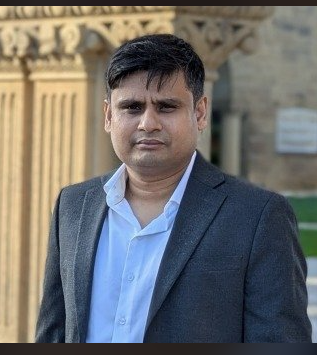
Dr. Md Tauhidul Islam
Affiliation: Assistant Professor, Department of Radiation Oncology, Stanford University
Abstract
Graphs are a fundamental data structure for representing complex systems, yet real-world biomedical graphs—spanning molecular interaction networks, cell atlases, spatial omics, and multi-omics integration—pose severe challenges for modern graph learning methods. These graphs are massive in scale, heterogeneous in structure, and rich in long-range dependencies that extend far beyond local node neighborhoods. As a result, existing graph neural networks often struggle with scalability, information loss, and limited interpretability.
In this workshop, a new perspective will be presented on biomedical graph intelligence that moves beyond conventional node-and-edge message passing. I will introduce a class of representation learning frameworks that transform large, structured graphs into semantically meaningful and computationally efficient image-like representations, enabling the use of highly scalable deep learning models while preserving global topology and functional organization. Leveraging tools from spectral graph theory, optimal transport, and manifold learning, these methods provide both state-of-the-art predictive performance and interpretable insights into graph structure and dynamics.
Through applications in molecular interaction networks, single-cell atlases, cancer progression graphs, and multi-omics integration, I will demonstrate how rethinking graph representations enables scalable analysis, improved generalization, and biological discovery. This work highlights how principled representation learning can unlock the next generation of deep learning methods for complex graph-structured data.
Speaker Bio
Dr. Md Tauhidul Islam is an Assistant Professor at Stanford University, where he leads a research program at the intersection of artificial intelligence, machine learning, and representation learning for complex, high-dimensional data. His work focuses on developing interpretable, data-efficient, and scalable AI systems, with a particular emphasis on learning over large, heterogeneous, and graph-structured datasets. While biomedical data serve as a primary application domain, his research addresses fundamental challenges in modern AI, including representation design, scalability, multimodal fusion, and model interpretability.
Dr. Islam has made significant contributions to graph intelligence and deep representation learning, including graph-to-image transformation frameworks, eigenmapping methods for fast and scalable graph analysis, and manifold-based techniques that reveal how deep networks learn and organize information. These methods move beyond traditional node-and-edge message passing to capture global structure, long-range dependencies, and semantic organization in complex graphs. His work also spans multimodal learning, where he develops unified architectures that integrate graphs, images, and tabular data within a single interpretable framework.
His research has been published in leading venues such as Nature Biomedical Engineering, Nature Computational Science, and Nature Communications, and is supported by competitive awards including the NIH K99/R00 Pathway to Independence Award. At Stanford, Dr. Islam collaborates broadly across computer science and applied sciences to translate advances in trustworthy AI into scalable computational frameworks for discovery and decision-making.
 $
$  ৳
৳