Invited Speaker 1
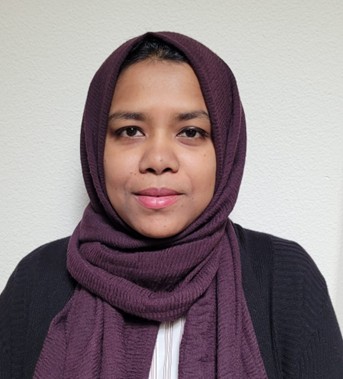
Dr. Samantha Lubaba Noor, Member - IEEE
Post-Silicon Debug Engineer, Intel Corporation, USA
Title: Potential of Plasmonics in High Performance Computing
Abstract:
High performance computing systems require enormous numbers of processors to support parallel processing due to limited clock speed in Si-CMOS technology. The interconnection wires of the large number of cores dominate energy consumption and delay in the HPC system, creating a wire bottleneck. For a large class of applications that heavily rely on arithmetic units, the clock speed of the processors can be significantly increased by utilizing optical technology instead of the CMOS technology. However, optics, due to its diffraction limit, mars the gain in speed as the optical devices are bulky and the processors would be several orders of magnitude larger compared to the electronic counterparts. Plasmonics can bridge the gap between optics and electronics. Plasmonics can significantly increase the level of integration and miniaturization of the optical devices. As a result, augmenting CMOS processors with plasmonic computing modules in HPC systems offers compact processor cores with high clock rates, heavily decreasing the required core count for a given target performance and, hence, reducing the wire bottleneck.
This talk will give an overview of the advancement of plasmonics in computing and potential of plasmonics in high performance computing.
Bio:
Samantha Lubaba Noor is a Post-Silicon Debug Engineer at Intel Corporation, USA. Her role involves debugging failure in semiconductor chips and isolating defects to identify prime yield limiters of a process. She completed her PhD in Electrical and Computer Engineering from Georgia Institute of Technology, USA in 2023. She has specialization in modeling beyond CMOS nanoelectronic devices and photonic integrated circuits. She is the recipient of the 2025 Intel LTD Yield Department Divisional Award, Cadence Women in Technology Award, IEEE Women in Photonics Travel Grant, Georgia Tech CRNCH Fellowship, and Georgia Tech Otto and Jenny Karauss Scholarship. She currently serves as a member of IEEE WIE Travel Grant Ad Hoc Committee and WIE Upskill Ad Hoc Committee.
Invited Speaker 2
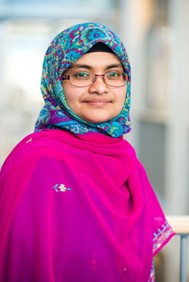
Dr. Shahina Begum
Professor, School of Innovation, Design and Engineering , Division of Computer Science and Software Engineering Mälardalen University (MDU)
Title: Trustworthy and Explainable AI Systems.
Abstract: Artificial intelligence is no longer a laboratory curiosity, it is increasingly embedded in decisions that affect human safety, economic stability, and societal well-being. Yet, as AI systems grow in complexity and autonomy, a fundamental question remains: Can we trust them?
In this invited talk, I will discuss how trust in AI can be systematically engineered rather than assumed. Drawing on real-world deployments and research outcomes from safety-critical domains including road safety, predictive maintenance in industrial systems, and air traffic management I will present recent advances in explainable and interpretable AI that go beyond post-hoc explanations. The talk highlights principled approaches to robustness, and transparency, enabling AI systems whose decisions can be understood, and justified to human stakeholders. Importantly, trustworthy AI is not solely a technical challenge.
I will argue that aligning AI behavior with human values, domain expertise, and emerging regulatory frameworks requires close collaboration across disciplines.
By addressing both technical and societal concerns, the talk outlines future directions for building AI that aligns with human values and regulatory standards in shaping the next generation of AI systems.
Brief Bio: Dr. Shahina Begum is a Professor and Deputy Leader of the Artificial Intelligence and Intelligent Systems group at Mälardalen University (MDU). She received her PhD in Artificial Intelligence from MDU in 2011. Her research focuses on developing intelligent systems for medical and industrial applications, with expertise in Artificial Intelligence, Multimodal Machine Learning, Explainable AI (XAI), Data Analytics, Decision Support Systems, Knowledge-Based Systems, and Intelligent Monitoring and Prediction Systems.
Shahina has been the principal applicant and project manager for a number of research projects at MDU. She received a Swedish Knowledge Foundation’s Prospect individual grant for prominent young researchers in 2011 and is today leading several research projects in the area of intelligent -monitoring and prediction systems in collaboration with industrial partners. Shahina has been listed amongst the 100 most relevant researchers in sustainable AI algorithm development by the Royal Swedish Academy of Engineering Sciences.
Shahina Begum has extensive involvement in both research and teaching activities driven by industry needs and collaborative initiatives with both the public and private sectors. Shahina has been involved (as the course main responsible/designer/teacher/examiner) of total 21 distance and campus-based courses/learning modules mainly in Artificial Intelligence and Machine learning at MDU both for regular students and industrial professionals.
She is the main responsible for the Artificial Intelligence content for the proposal “Bachelor program in Applied AI” at MDU. Shahina has been involved in several initiatives for lifelong learning at MDU for example, IntoDeep: Developed AI and Deep Learning materials for process industries, PROMPT: Professional Master’s program in Software Engineering, course responsible for ‘Machine Learning with Big Data’, attracting over 500 applicants every year during 2018 – 2025, MOOC Course: Designed and facilitated the ‘Basic Knowledge on ML’ and AIClass (https://aiclass.se), PDF: Implemented a Personalized, Dynamic, and Flexible Educational Model for Industrial Professionals, and DECREASE: Responsible for the ‘Trustworthy AI course’ funded by the Swedish Knowledge Foundation.
 $
$  ৳
৳