Workshop Speaker 1
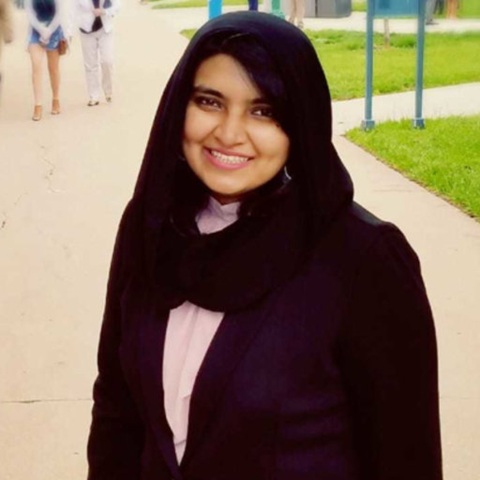
Dr. Mahrukh Khan
Assistant Professor, Electrical and Computer Engineering, The College of New Jersey, USA.
Title: Future of Antenna Design Procedures and Characteristic Modes
Abstract:
Microstrip antennas are in massive demand for several emerging applications such as biomedical devices, ultrawideband communication devices, radar applications, etc. Microstrip antennas are inherently narrowband and low gain antennas. Since their inception, various methods have been introduced to improve them. Most of the methods depend on the software that needs unlimited optimization runs, which increases the antenna design’s computation cost. Theory of Characteristic Modes (TCM) is the powerful analysis technique that made antenna structure easy to understand and comprehend. As it gives physical insight into the antenna’s structure, the analysis and design of the antenna may not need many optimization cycles. It was first introduced in the 1970s, but it was not till 2007 that this method hit the modern world again for planar antenna design. The reason for this method’s unmatched success was the details it provides about the antenna’s surface current behavior in a user-friendly manner. Since then, CMA (Characteristic Mode Analysis) has been successfully applied to analyze planar structures and helps design and improve specific characteristics of antennas. Most of my research focused on designing and optimizing the UWB antennas using CMA. CMA can fully illustrate antenna structure with a finite number of resonant modes. Hence, it has the potential to simplify complicated and tedious antenna design procedures.
This talk will focus on the following: (a) Can characteristic modes analysis define the future of antenna design procedures by helping to reduce the complexity of antenna design procedures? (b) The possibilities of producing a compact and efficient antenna design using characteristic modes. (c) how surface currents can be controlled to produce optimized antenna designs
Bio:
Mahrukh Khan is working as an Assistant Professor in the Electrical and Computer Engineering Department at The College of New Jersey (TCNJ). She received her Bachelor of Science and Master of Science degree in Electrical Engineering from the University of Engineering and Technology, Lahore, Pakistan, in 2007 and 2011. Dr. Khan received her Ph.D. degree in Electrical Engineering from the University of Missouri-Kansas City, Kansas City, Missouri, USA, in 2017. Later, she worked as a Post-Doctoral Fellow in Nano and Micro Electronics Lab at UMKC. In early 2020, she worked as an Assistant Research Professor in the Missouri Institute of Defense and Energy (MIDE). She has published more than 20 articles and conference papers in renowned journals and peer-reviewed conferences in her field of research. In 2024, she won a “TCNJ’s Early Career Faculty Excellence Award”. In 2022, She won an NSF Engineering Research Initiative grant to work on design challenges of microstrip antennas using surface current optimization. She has won an honorable mention in the 2015 International Altair FEKO Student Competition. She has also won the prestigious UMKC School of Graduate Studies (SGS) fellowship for her outstanding research. In 2016, She also selected as the UMKC Outstanding Graduate Student award at the CSEE department. Dr. Khan was chosen as an IEEE APS Young Professional Ambassador. Dr. Khan is 1 of 12 members chosen from across the globe. She has served as a reviewer of top-notch peer-reviewed journals such as IEEE Antennas and Propagation Magazine, IET Microwaves, Antennas, Propagation, etc. She is an active member of IEEE Young Professionals and IEEE Women in Engineering Societies.
Workshop Speaker 2
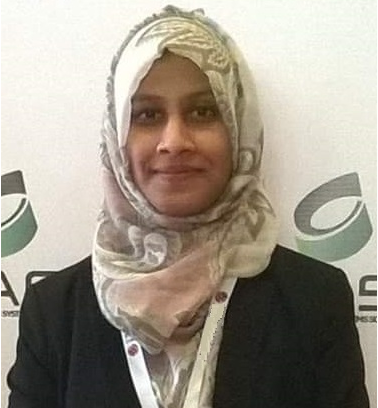
Dr. Farhana Parveen, Senior Member - IEEE
Assistant Professor, Electrical and Electronic Engineering, East West University, Bangladesh
Title: Designing Tomorrow’s Antennas: Numerical Perspectives
Abstract:
This workshop provides a comprehensive overview of modern software-based methodologies for antenna design, targeting students, researchers, and professionals seeking practical proficiency in computational electromagnetic tools. With the growing demand for high-performance antennas in wireless communication, radar, IoT, and satellite systems, efficient design workflows supported by simulation software have become essential. The session explores a range of industry-standard platforms—including HFSS, CST Microwave Studio, FEKO, ADS, and MATLAB antenna toolboxes—highlighting their core capabilities, modeling techniques, solvers, and application domains. Participants will learn how different numerical methods such as FEM, MoM, FDTD, and ray-tracing influence design accuracy, speed, and suitability for various antenna types. Through guided demonstrations, comparative analysis, and best-practice design strategies, the workshop equips attendees with the knowledge to choose appropriate tools and methodologies for patch, array, broadband, and specialty antennas.
Bio:
Dr. Farhana Parveen is an assistant Professor in the department of EEE of East West University. She graduated from BUET and obtained PhD from University of Central Florida, USA. Prior to joining EWU, she served as a lecturer in Stamford University Bangladesh, and graduate teaching assistant in UCF. She has been serving as executive committee members in several chapter and affinity groups under IEEE Bangladesh section since 2015. Her research area is in the field of RF, microwave and bio-electromagnetics. She has publications in several flagship conferences, and she has served in the technical program committee and reviewer panel in different renowned journal and conferences. She has also received various national and international awards and fellowships for her research and academic excellence.
Workshop Speaker 3

Dr. Khaleda Ali, Member - IEEE
Associate Professor, Electrical and Electrical Engineering, The University of Dhaka, Bangladesh
Title: Designing Tomorrow’s Microwave Devices: Fabrication and Characterization Perspectives
Abstract: Microstrip devices, the fundamental building blocks in modern RF and microwave systems include, but are not limited to, antennas, directional couplers, power dividers, filters, resonators, and matching networks. This workshop provides a comprehensive introduction to the fabrication and measurement of planar microstrip devices, combining theoretical concepts with hands-on practical demonstrations.
Participants will be guided through the complete fabrication workflow using a simple microstrip antenna and bandpass filter as hands-on examples. The process begins with strategic substrate selection, comparing common materials like cost-effective FR-4 to high-frequency laminates such as Rogers RO4003. Fabrication steps include precision substrate cutting, photolithographic patterning of the copper cladding, and wet chemical etching to define the circuit. The workshop will also address assembly techniques, including soldering for component attachment, and briefly touch on alternative methods for flexible substrates. Finally, we will demonstrate the vital measurement techniques, using a portable Vector Network Analyzer (VNA) to evaluate device performance—measuring key parameters like return loss and insertion loss—thereby closing the loop from design and fabrication to experimental verification.
Bio: Dr. Khaleda Ali is an associate professor in the Department of Electrical and Electronic Engineering at the University of Dhaka. She received her PhD from the Department of Electronic Engineering at Queen Mary University of London, where her work concentrated on on-body communication systems operating at millimeter-wave frequencies. Her current research focuses on wearable antennas, flexible RF systems, inverse design for metasurface-incorporated photonic and microwave devices, etc. Dr. Ali has authored over 20 peer-reviewed publications in high-impact journals and international conferences, including those from IEEE, the Optical Society of America, Elsevier, etc. She has participated in organizing special sessions at the European School of Antennas, ACES, and IEEE conferences, both at home and abroad. She also serves as a peer reviewer for several distinguished journals, notably IEEE Transactions.
 $
$  ৳
৳